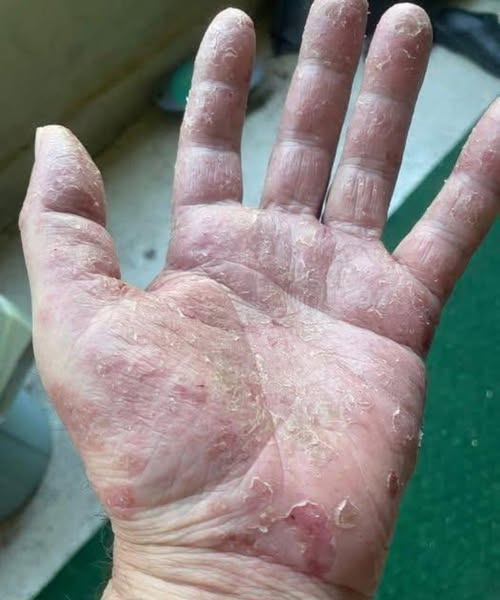
The symptoms of hand dermatitis vary in severity, but they typically include:
- Dryness and peeling – Flakes and scales often form as the outer layer of the skin breaks down.
- Cracks and sores – Deep fissures can develop, causing pain and sometimes bleeding.
- Itching and burning – Persistent itching can interfere with sleep and daily activities.
- Thickened skin – Chronic dermatitis may cause the skin to harden and become rough over time.
Without treatment, the condition can worsen, leading to secondary infections. Signs of infection include pus, swelling, and severe tenderness.
Treatment Options:
Managing hand dermatitis requires a combination of medical treatment and lifestyle adjustments. Some of the most effective strategies include:
- Moisturizing on a regular basis – Throughout the day, apply thick, fragrance-free lotions or ointments to replenish hydration and build the skin barrier.
- To avoid irritants, wear protective gloves while cleaning, washing dishes, or handling chemicals. Cotton gloves used under rubber gloves can help minimize sweat buildup.
- Gentle handwashing is using moderate, soap-free cleansers rather than strong antibacterial soap. Always thoroughly dry your hands and apply moisturizer right away after washing.
- Topical medicines – Doctors may recommend corticosteroid creams or ointments to minimize inflammation. In severe situations, calcineurin inhibitors or other medications may be prescribed.
- For persistent, resistant instances, dermatologists may recommend light treatment or oral drugs to reduce symptoms.
-
When to Seek Medical Help: